Areas of Concentration
Specializations
Beyond general counselling, I have developed deep expertise in specific areas that reflect my passion and lived experience. These specializations allow me to provide focused, informed care.
East meets west
For South Asian individuals living in Western society, the experience of straddling two cultures can create unique challenges. You may feel pulled between honouring your family's traditions and pursuing your own path, dealing with expectations that don't always align with who you are.
I understand these complexities because I have lived them. My approach integrates cultural awareness into evidence-based therapy, creating a space where your full identity is acknowledged and honoured.
- Navigating the tension between cultural expectations and personal identity
- Intergenerational trauma and family dynamics
- Immigration and acculturation stress
- The stigma around mental health in South Asian communities
- Balancing collectivist values with individual needs
- Cultural shame, guilt, and perfectionism
EMDR Therapy
An evidence-based approach to healing trauma
EMDR (Eye Movement Desensitization and Reprocessing) is a well-researched therapy developed by Francine Shapiro. It is widely used to help people heal from trauma, difficult life experiences, anxiety, and long-standing emotional stress.
EMDR helps the brain process painful memories in a way that reduces their emotional impact, so they no longer feel overwhelming or controlling.
How EMDR therapy works
Sometimes the brain is unable to fully process a distressing experience. When this happens, memories can remain “stuck,” causing strong emotional or physical reactions long after the event has passed.
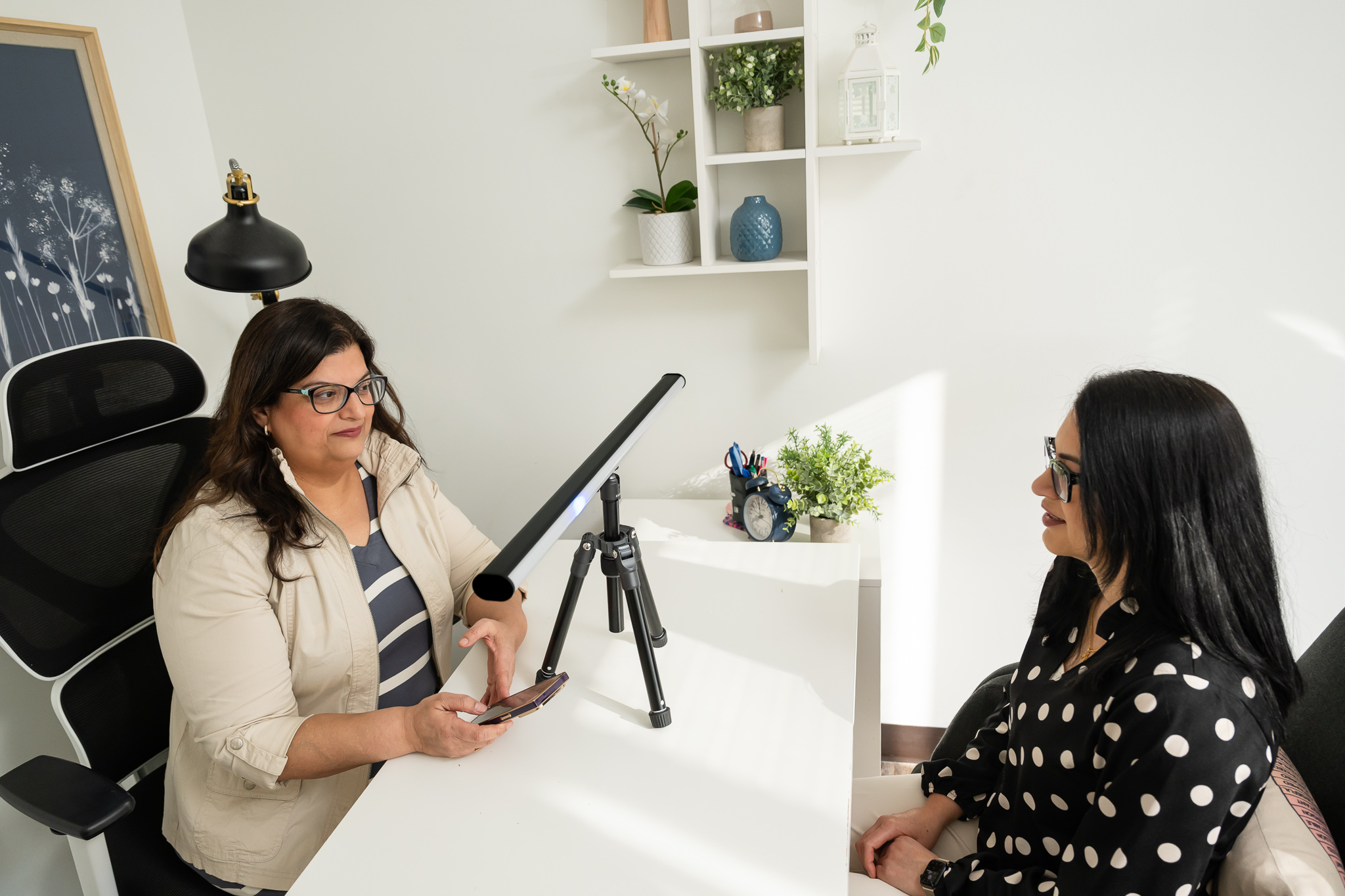
EMDR uses gentle, guided techniques — such as eye movements, tapping, or sounds — to help the brain safely reprocess these memories. Over time, the intensity of the memory fades, and it feels less distressing and easier to think about.

When the past still feels present
You may find EMDR helpful if you:
- Feel emotionally triggered by certain situations
- Have memories that come up unexpectedly
- Feel constantly on edge or unable to fully relax
- Avoid reminders of past experiences
- Feel disconnected from your emotions or body
- Struggle to move forward, even though you’ve tried
These responses are not personal flaws. They are signs that your nervous system learned how to protect you.
What healing can look like
As EMDR progresses, many clients notice:
- Less emotional distress when thinking about the past
- A greater sense of calm and balance
- Fewer physical reactions, such as tension or tightness
- Changes in negative self-beliefs, such as guilt, shame, or self-blame
EMDR is a structured process and works best when guided by a trained therapist in a safe and supportive environment.
EMDR therapy for South Asian clients
Many South Asians were not given the space or language to talk about emotional pain. Trauma may not have been acknowledged — especially when it involved family relationships, cultural expectations, immigration stress, or growing up feeling unseen or unheard.
You may have learned to:
- Keep emotions to yourself
- Stay strong and push through
- Put others’ needs before your own
- Avoid difficult conversations to maintain peace
EMDR offers a way to heal without having to explain everything or repeatedly talk through painful details. Healing happens at a pace that feels manageable and respectful of your background and experiences.
A culturally responsive approach
In my private practice, EMDR is offered with cultural awareness and sensitivity. This includes:
- Respect for family dynamics and cultural values
- Understanding the impact of intergenerational patterns
- A collaborative, non-judgemental therapeutic relationship
- Emphasis on safety, choice, and trust
Healing does not mean turning away from your culture — it means finding more ease within yourself.
Get started
If you're curious about EMDR therapy and would like to explore whether it's a good fit for you, I invite you to reach out to book a consultation.
Book a consultationReady to begin your journey?
Taking the first step can feel difficult, but you don't have to do it alone. Reach out for a free consultation and let's find the path forward together.